A classical concert in the 1837 Strauss Hall
An orchestra and a soprano play works by Mozart, Beethoven, Schubert, Brahms and the Strauss family, with museum entry and a glass of sparkling wine included in the ticket.
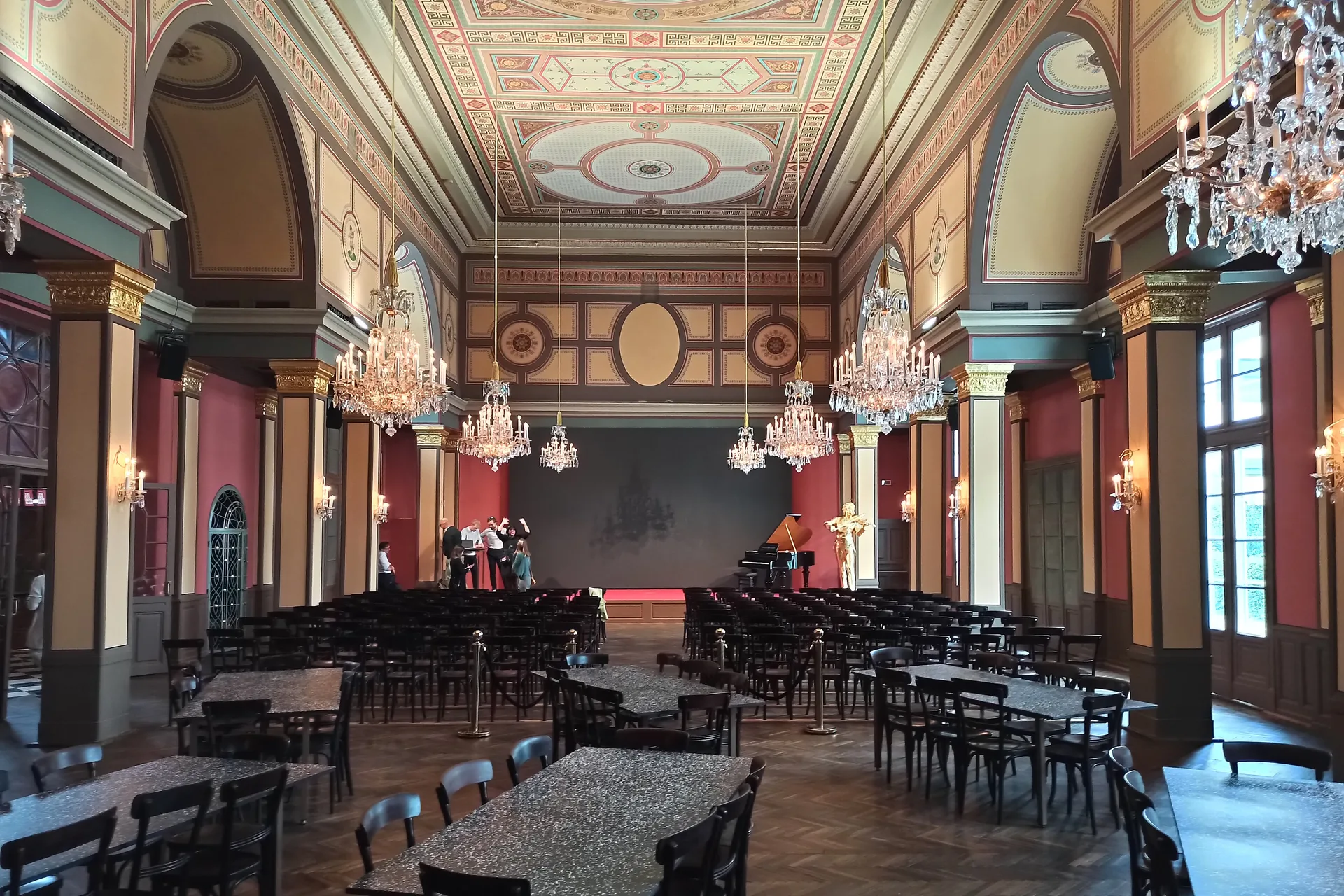
Vienna · Döbling
An orchestra and soprano fill the restored Strauss Hall of 1837, with the dynasty's museum under the same roof.
Independent guide, not affiliated with the House of Strauss or its organisers. Tickets are booked with GetYourGuide.
Guests love the soprano, and the little museum that sets the scene before the music.
Is it worth the trip out to Döbling?
The short answer
Yes, if you want a concert with a story around it and are happy to take a short ride out of the centre. The ticket bundles three things: entry to the Strauss museum, a glass of sparkling wine and a concert by an orchestra and a soprano in a restored hall from 1837. Reviewers praise the musicians and say the museum and the visuals add context. The draw is the hall and the family it remembers, and the cost is the trip.
One booking covers the museum before the music, the sparkling wine at the reception and a reserved seat at the concert, which runs about 75 minutes according to the page. The museum stays open before and after, so the evening can run longer than the concert. If you would use all three parts, it is a fuller evening than a bare seat; if you would only use the concert, the bundle is worth less to you.
There is no staged opera, ballet or dinner here. What you get is a classical programme with a narrated film about the Strauss dynasty and a light show, in a historic hall in the north of the city. Dinner is sold on the House of Strauss's own site as its own ticket, and the programme varies by date.
Visitors who want the Strauss story and a classical programme in one evening, travellers who like a museum visit with their concert and anyone who prefers a quieter district to the old town after dark. If you want a famous-name hall in the centre, or an evening free for a dinner at a fixed hour, look elsewhere.
Four facts about the evening
Programme notes
The booking page names Mozart, Beethoven, Schubert, Brahms and the Strauss family. It gives no setlist, so this describes the kinds of music the family wrote, and its neighbours in the programme, as encyclopedia sources describe them.
Programmes vary by date and by performers, so nothing here is a running order for your night.
Wikipedia says Johann Strauss I developed his waltzes from a rustic peasant dance into what posterity would recognise as the Viennese waltz, and that his son Johann Strauss II, called the Waltz King during his career, scored them for a larger orchestra. The Blue Danube, composed in 1866, has been one of the most consistently popular pieces in the classical repertoire.
The polka began in nineteenth-century Bohemia and, Wikipedia says, reached Vienna by 1839. The Strauss family took it up: Eduard Strauss made his mark with the fast polka, called the polka-schnell in German, and Josef Strauss wrote the Pizzicato Polka with his brother Johann.
Johann Strauss I wrote the Radetzky March, first performed in Vienna in 1848. Wikipedia says it is the usual final encore at the Vienna Philharmonic's New Year's Concert, where the audience claps along under the conductor's direction, a custom dating from 1958.
Wikipedia says Johann Strauss I heard the quadrille on a trip to France in 1837 and became largely responsible for introducing it to Austria. It adds that the galop, a fast dance in two-four time, was often the final dance of an evening, and that Johann Strauss II wrote numerous galops.
Johann Strauss II also wrote operettas, of which Die Fledermaus, Eine Nacht in Venedig and Der Zigeunerbaron are the best known, Wikipedia says. The booking page says a soprano performs with the orchestra, and names Mozart, Beethoven, Schubert, Brahms and the Strausses, without listing pieces.
Wikipedia says Brahms was a personal friend of Johann Strauss II, and that he once wrote the opening notes of The Blue Danube on a fan for Strauss's wife Adele, adding that it was unfortunately not by Brahms. Schubert, born in Vienna, wrote more than 600 songs, among them an Ave Maria.
The evening, in order
The start is not fixed: take it from the calendar, then check it once more on your confirmation.
The booking page says doors open 90 minutes before the concert and advises arriving early. That window belongs to the museum and the sparkling wine, so count it as part of the evening, not as waiting.
The ticket includes museum entry. The House of Strauss describes an audiovisual exhibition that runs from the birth of Johann Strauss I through life in nineteenth-century Vienna to the history of The Blue Danube, with a short multimedia show in the concert hall itself.
A glass of sparkling wine at the reception in the historic venue comes with the ticket, says the booking page. One reviewer mentions a cloakroom and water.
The concert runs about 75 minutes. An orchestra and a soprano perform, a cinematic narrative traces the rise of the Strauss dynasty and a light show plays in the hall. The booking page says the concert is in English, with German and Chinese subtitles, and that seats are reserved.
The booking page says the museum stays open before and after the concert, so there is no need to leave at once. The U-Bahn station and tram stops on the House of Strauss's approach page are the way back to the centre.
What the ticket covers
Six things the ticket decides before you choose a day.
The hall, the chairs and the street outside
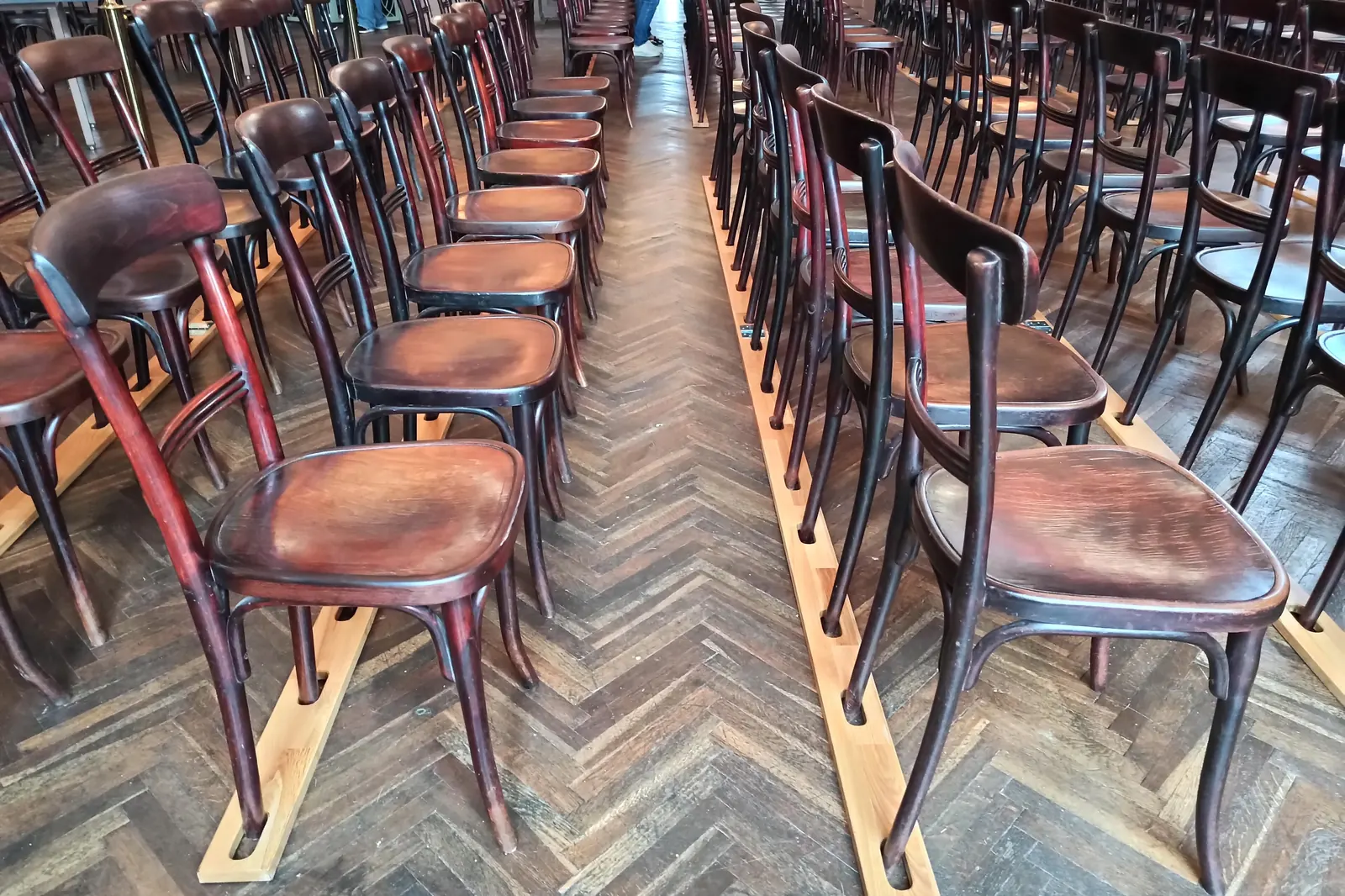
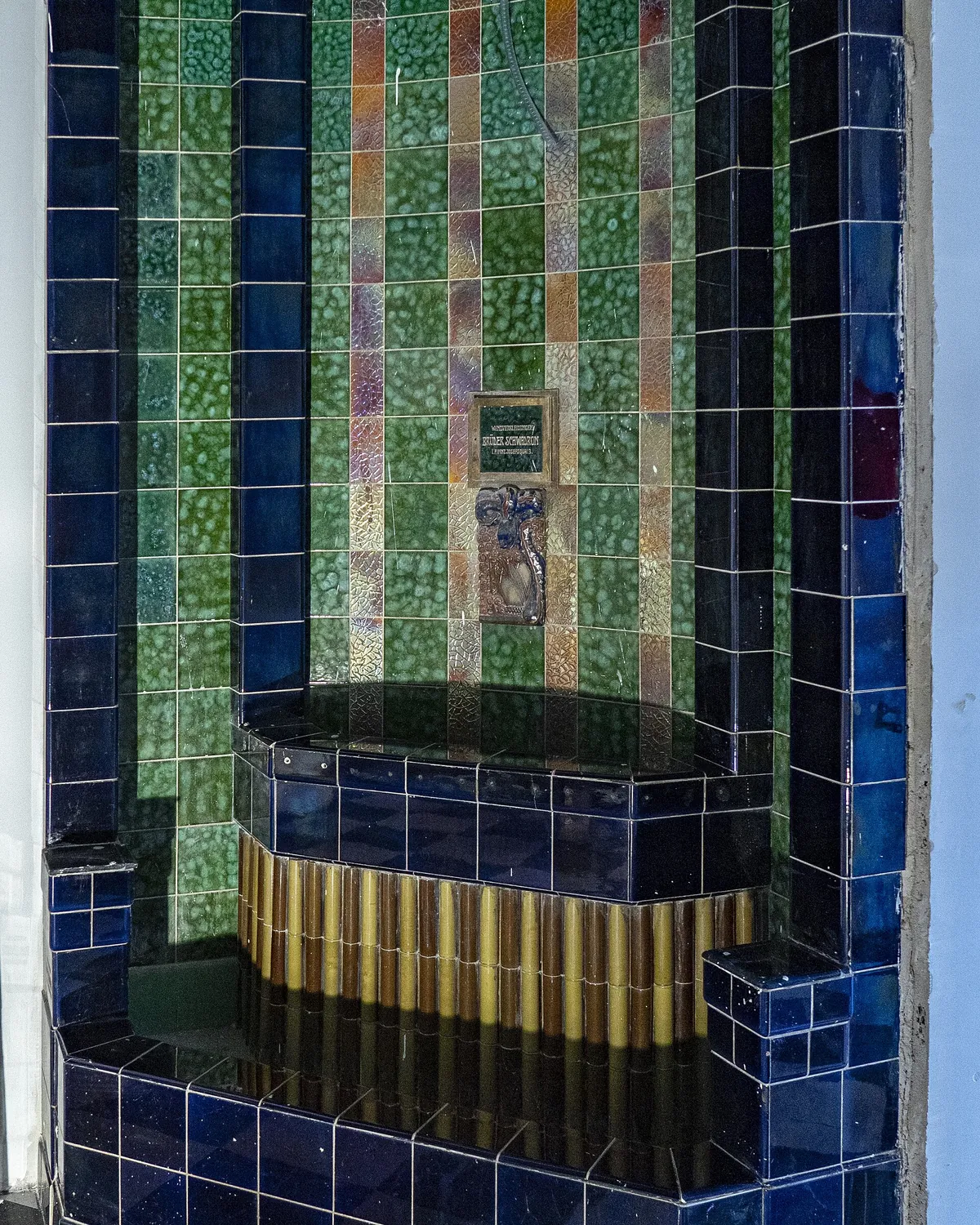
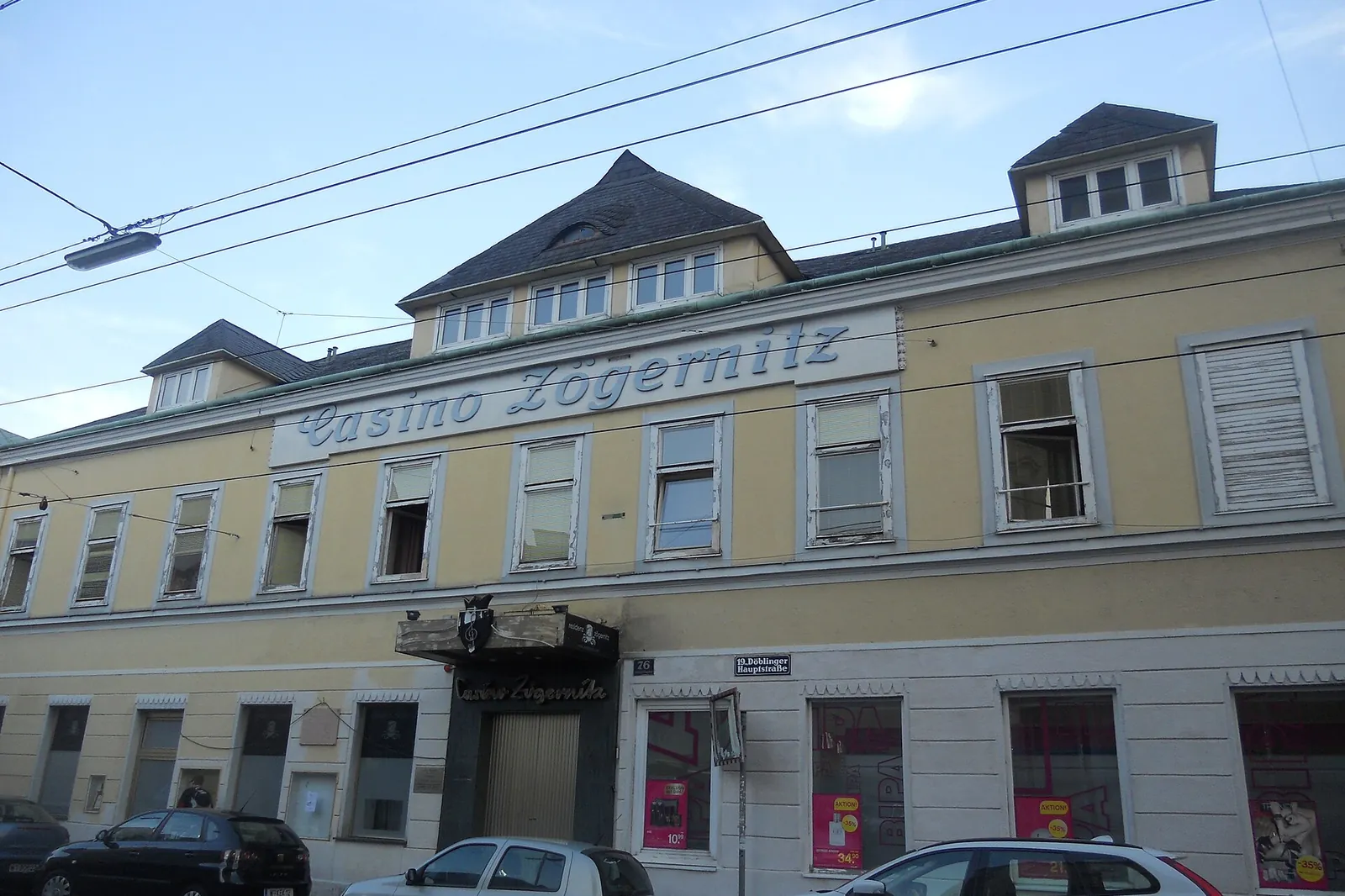
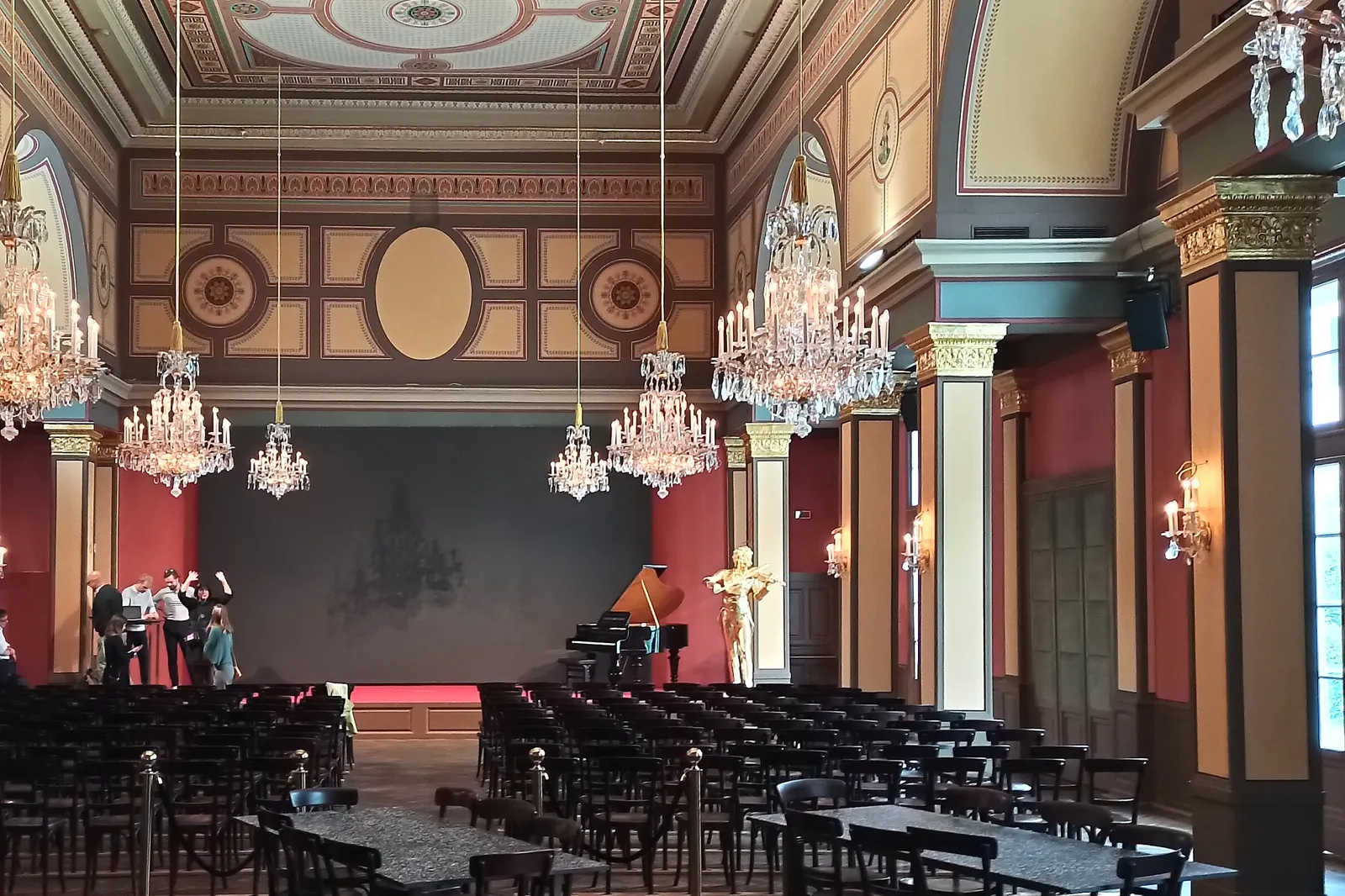
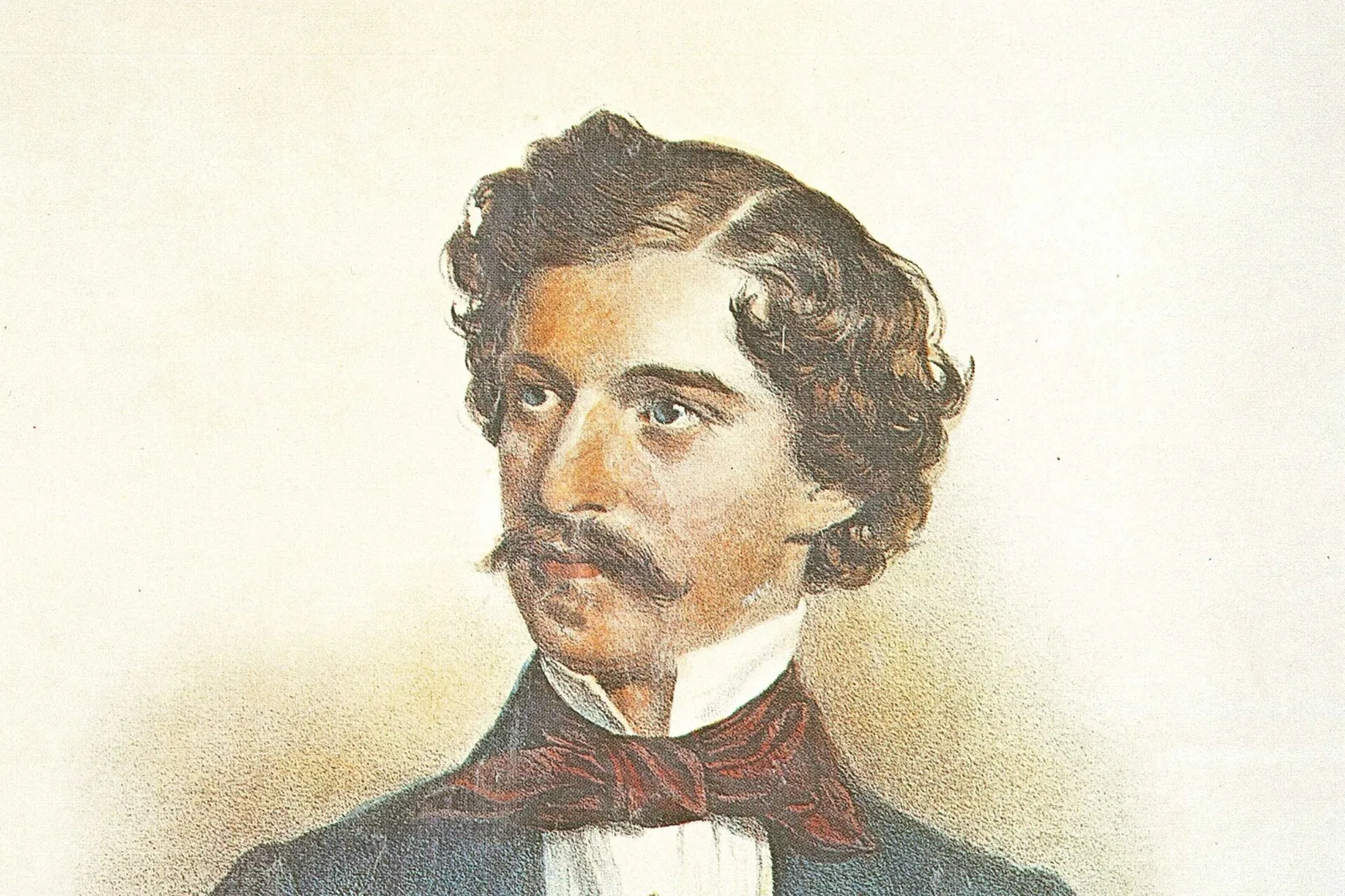
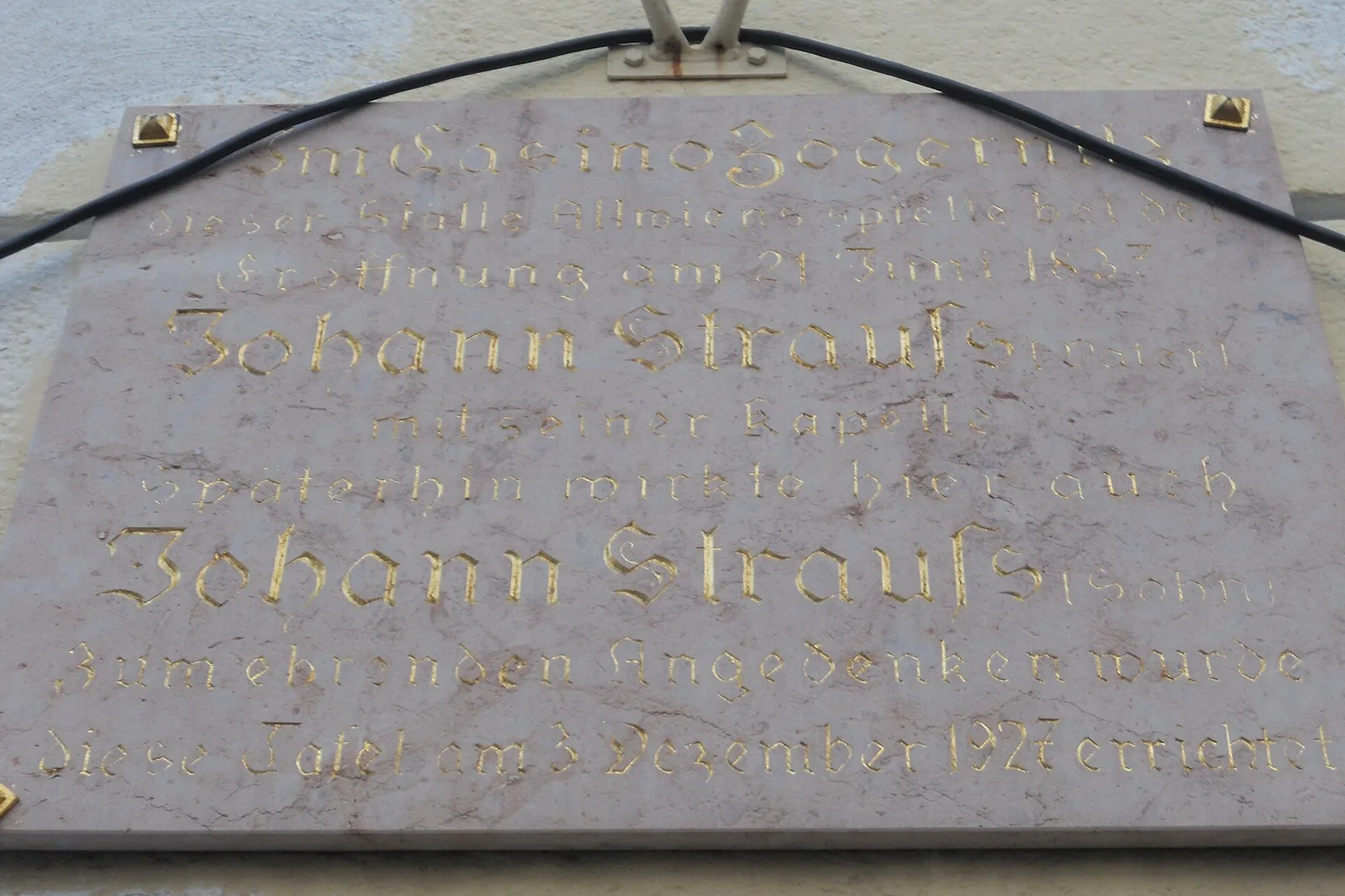
Rows of bentwood chairs in the hall, a tiled fountain in the foyer, the façade on Döblinger Hauptstraße, the stage end of the hall, a lithograph of Johann Strauss II from 1853 and the marble plaque on the façade.
The concert, and three more things to book
The first card is the Döbling concert this guide covers. The other three are for other hours of a Vienna trip: a ride on the giant Ferris wheel, a guided tour of the Sisi Museum and the imperial palace gardens, and a hop-on hop-off bus ticket.
An orchestra and a soprano play works by Mozart, Beethoven, Schubert, Brahms and the Strauss family, with museum entry and a glass of sparkling wine included in the ticket.
A ticket for a ride on Vienna's giant Ferris wheel, with direct turnstile access so that you skip the cashier desk.
A guided tour of the Sisi Museum and the imperial palace gardens, with skip-the-line entry, planned at about two hours.
A sightseeing bus ticket with commentary in 19 languages and the freedom to get on and off along the route.
Other things to book in Vienna
Getting there and what to know
The House of Strauss stands at Döblinger Hauptstraße 76, in Vienna's 19th district, Döbling. Wikipedia places Döbling in the north of the city, bordering the Vienna Woods.
The House of Strauss's approach page lists Spittelau station on the U-Bahn and two tram stops, Pokornygasse and Rampengasse. It gives the walk from the tram stops as short and the walk from the station as longer.
The approach page says there is parking nearby, but that spaces are limited, so public transport is the easier choice.
Doors open 90 minutes before the concert, and the booking page advises arriving early. Use the time for the museum and the wine.
A summary of recent reviews notes that some travellers would like more comfortable seating, such as cushions, and one reviewer calls the VIP seats cushioned and worth it.
The booking page gives no dress code. The guide to what to wear and when to clap has the general rules.
Cancelling a GetYourGuide booking at least 24 hours ahead returns the full amount, and paying can be deferred.
More reading
FAQ
Yes, if you want a classical concert with a museum visit and a glass of sparkling wine in one booking and can travel to Döbling. Reviewers praise the soprano and the orchestra. If you want a famous-name hall in the centre, look elsewhere.
At Döblinger Hauptstraße 76, in Vienna's 19th district, in the north of the city. The House of Strauss's approach page lists a U-Bahn station and two tram stops. Check the route from your hotel in a map app.
Museum entry, a glass of sparkling wine and a reserved seat at the concert, according to the booking page. Dinner would have to be booked on its own.
The concert runs about 75 minutes. Doors open 90 minutes before it, and the museum is open before and after.
English, with German and Chinese subtitles, according to the booking page.
An orchestra and a soprano. The programme and the performers vary by date, so read your confirmation.
The booking page names Mozart, Beethoven, Schubert, Brahms and the Strauss family and gives no running order, so expect the programme to change.
Yes. Cancelling at least 24 hours ahead returns the full amount of a GetYourGuide booking, and paying can be deferred.
The booking calendar shows what it costs in your currency.