The family
The Strauss family, explained
Who the four Strauss composers were, how the family turned the waltz and the polka into Vienna's signature sound, and what links them to Döbling.
Check the concert dates ↗Quick answer
The Strauss family were four Viennese composers of dance music: Johann Strauss I, born in 1804, and his sons Johann II, Josef and Eduard. They made the waltz, the polka and the march into Vienna's signature sound, and Johann II became known as the Waltz King. Their orchestra toured widely until Eduard disbanded it in 1901.
Four composers, one name
Johann Strauss I was the father and Johann II, Josef and Eduard were his sons. Wikipedia says the father and his rival Joseph Lanner set the foundations for the sons to carry on the dynasty, writing waltzes, polkas and galops that Viennese dance halls wanted every week. The House of Strauss's museum page calls the family four geniuses and one legend. A plaque and a hall in Döbling tie the family to one address, and this guide tells who each of them was.
Johann Strauss I, the father
Born in 1804, the son of innkeepers, he played in Lanner's quartet before forming his own band in 1825. Wikipedia credits him with developing the waltz from a rustic dance into the Viennese waltz, and with introducing the quadrille to Austria after a trip to France in 1837. He wrote the Radetzky March in 1848, was appointed court ball music director in 1846, and died in 1849 of scarlet fever. He was buried at the Döbling cemetery beside Lanner, and both were moved to the Central Cemetery in 1904; the old cemetery is now the Strauss-Lanner Park.
Johann Strauss II, the Waltz King
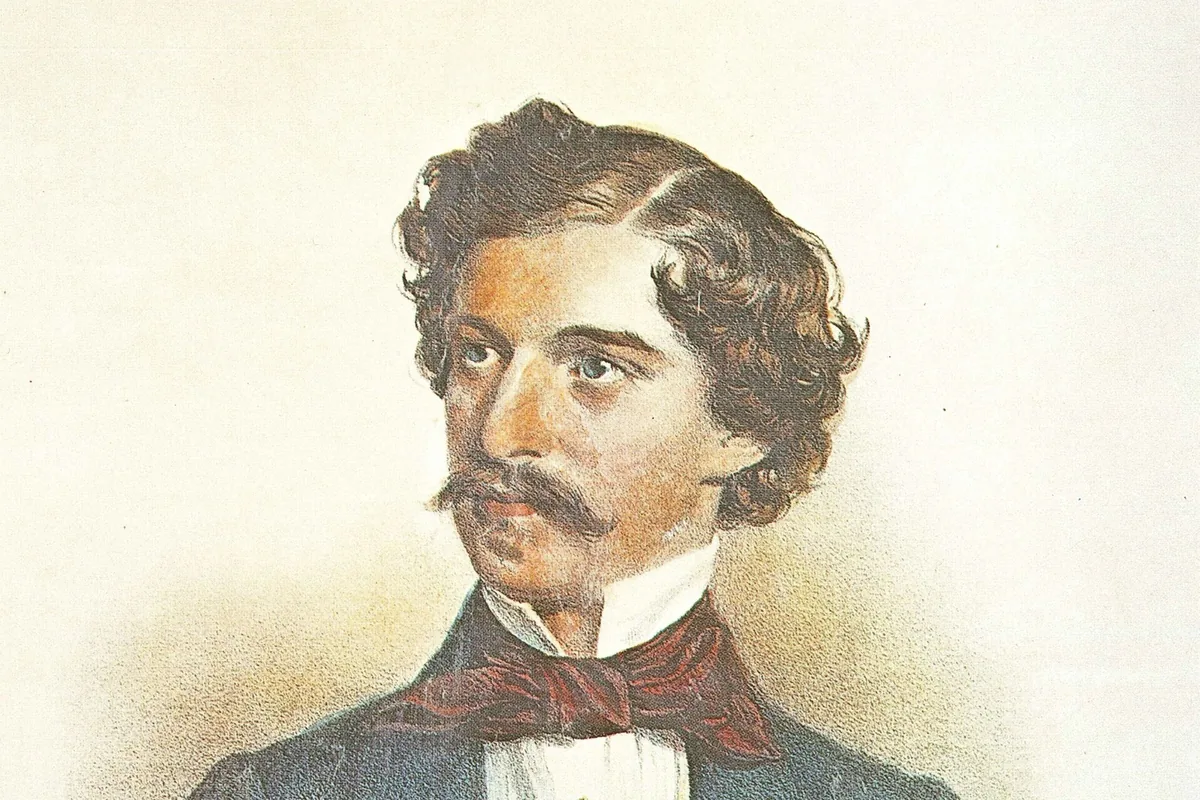
The eldest son was meant to be a banker, but he learned the violin and made his debut as a conductor in 1844. Wikipedia says he composed over 500 waltzes, polkas, quadrilles and marches, and in his lifetime was called the Waltz King. His best-known works include the operetta Die Fledermaus, Tales from the Vienna Woods and The Blue Danube. He became court ball music director in 1863, toured Russia from 1856 and travelled to Boston in 1872, where he conducted a monster concert with more than a thousand performers.
Josef Strauss, the engineer
Josef was born in 1827 and trained as an engineer. Wikipedia says he worked for the city of Vienna and designed a horse-drawn street-sweeping vehicle before joining the family orchestra in the 1850s. He took over the orchestra when his brother Johann fell ill in 1853, and he wrote 283 works with opus numbers, including waltzes, polkas and the Pizzicato Polka with Johann. Johann is quoted as saying that Josef was the more gifted of the two of them, and that he himself was merely the more popular. Josef died in 1870, after collapsing on the conductor's podium in Warsaw.
Eduard Strauss, the conductor
Eduard, born in 1835, joined the orchestra as a conductor in 1862. Wikipedia says he is remembered more as a conductor than as a composer, and that he made his own mark with the fast polka, known in German as the polka-schnell, in pieces such as Bahn frei. He led the Strauss Orchestra until he disbanded it on 13 February 1901, after concerts in 840 cities around the globe, according to Wikipedia. He published a memoir, Erinnerungen, in 1906 and died in 1916.
The waltz and the polka
The waltz is a dance in three-four time, and Wikipedia says the Viennese waltz is the oldest of today's ballroom dances. It emerged in the second half of the eighteenth century out of the German dance and the Ländler, and large dance halls such as the Zum Sperl, in 1807, and the Apollo, in 1808, opened to give thousands of dancers space. The polka began in nineteenth-century Bohemia and, Wikipedia says, reached Vienna by 1839. The Strauss family wrote for both, and the dance halls of their time are the setting their music was made for.
Brahms and the fan
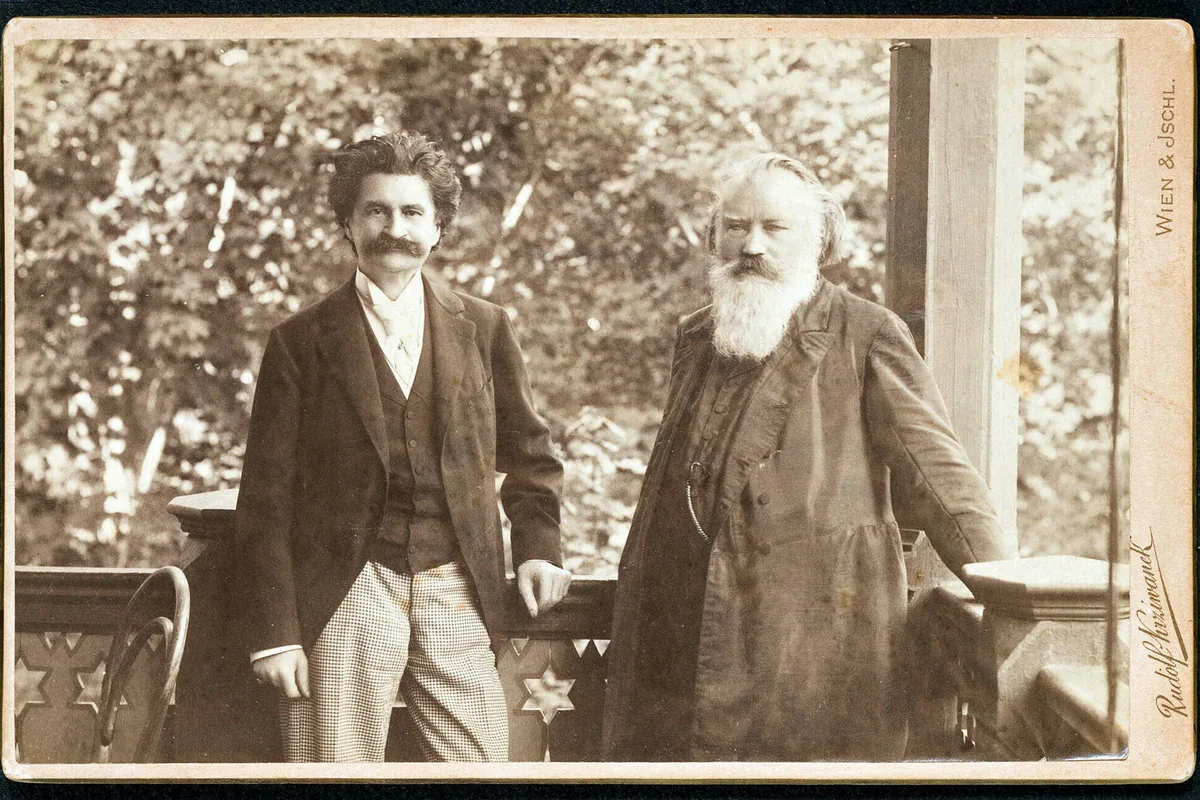
Brahms and Johann Strauss II were acquainted in the 1870s, and Wikipedia says their close friendship belongs to the years from 1889. When Strauss's wife Adele asked Brahms to sign her fan, he wrote the opening notes of The Blue Danube and added that it was unfortunately not by Brahms. In 1889 Brahms also played Josef Strauss's Die Libelle on the piano for an experimental recording. Wikipedia says Brahms admired much of Strauss's music, so the joke was a compliment.
Where the family turns up today
Wikipedia says the Vienna Philharmonic's New Year's Concert programmes always include pieces from the Strauss family, and that The Blue Danube and the Radetzky March are the usual encores. The House of Strauss's museum page says Eduard Strauss, a great-great-grandson of Johann Strauss I and president of the Vienna Institute for Strauss Research, helped design its exhibition. The museum is in Döbling, in the hall where the family is said to have played, which is the subject of the guide to the 1837 hall.
Read next: The 1837 Strauss Hall
Frequently asked questions
Who were the four Strauss composers?
Johann Strauss I (born 1804) and his three sons, Johann II, Josef and Eduard. All four wrote Viennese dance music, and Johann II was known as the Waltz King.
Which Strauss wrote The Blue Danube?
Johann Strauss II, in 1866, according to Wikipedia. Johann Strauss I wrote the Radetzky March.
How did Brahms know the Strausses?
Wikipedia says Brahms was a personal friend of Johann Strauss II, and that the two were close from 1889.
Sources